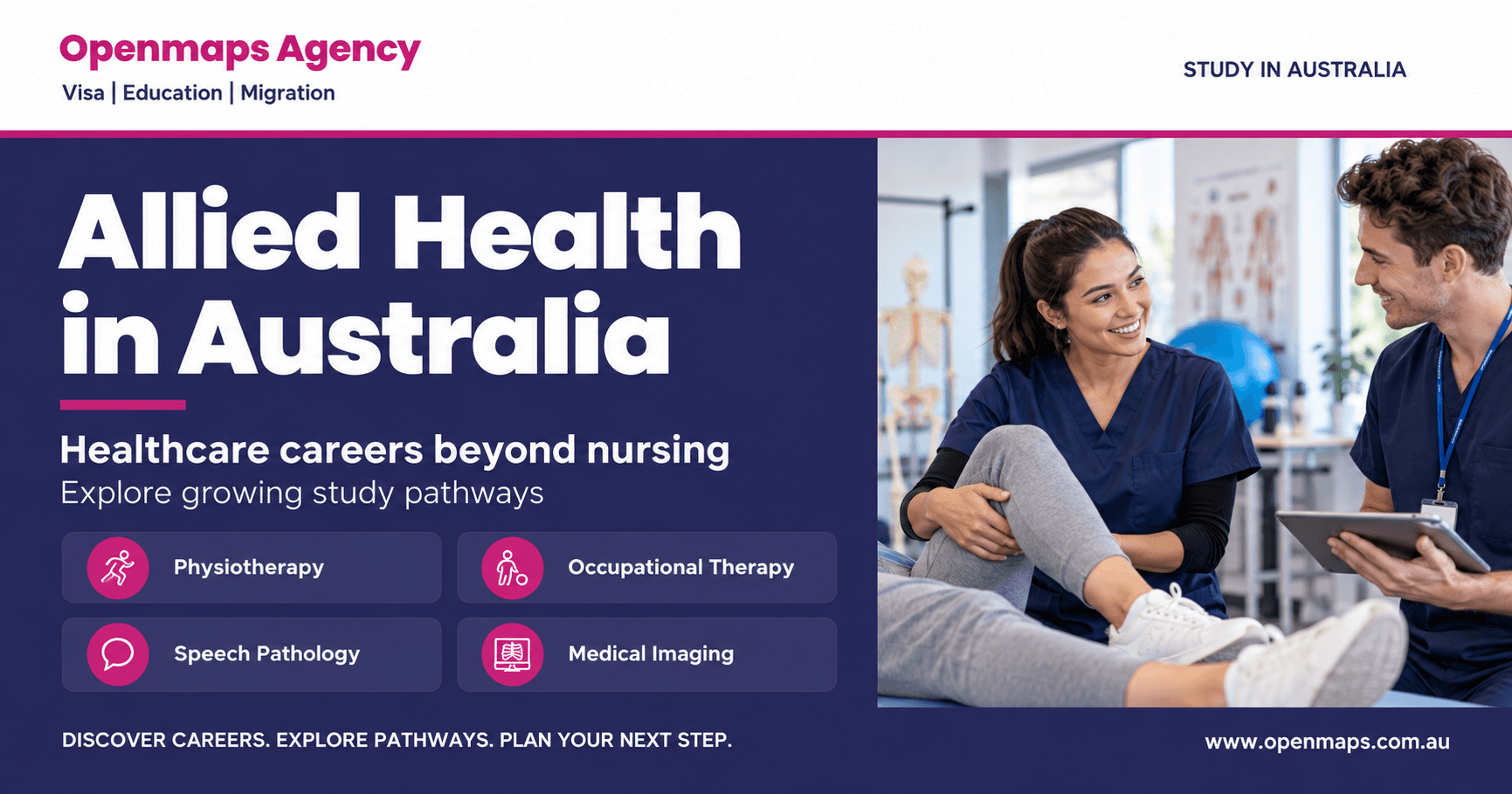
Australia's healthcare sector is much broader than nursing and medicine. Allied health professionals play an important role in helping people recover, communicate, move, manage disabilities, maintain independence and access diagnostic and therapeutic care.
Australia's healthcare workforce is growing, and allied health is an increasingly important part of that growth.
Jobs and Skills Australia identifies Health Care and Social Assistance as Australia's largest employing industry and projects it to have the strongest employment growth over the next five and ten years. This growth is being driven partly by Australia's ageing population and increasing demand for health and care services.
For students who want to build a career in healthcare but do not necessarily want to become nurses, allied health offers a range of alternative pathways.
Allied Health Careers to Explore
Physiotherapy
Physiotherapists work with people experiencing problems with movement and physical function. They may support recovery after injuries, surgery, illness or other physical conditions.
Workforce growth: approximately 27% between 2020 and 2024.
Occupational Therapy
Occupational therapists help people participate in everyday activities and develop or regain independence. Their work can involve disability, injury, rehabilitation, aged care and other areas of health and social care.
Workforce growth: approximately 34% between 2020 and 2024.
Speech Pathology
Speech pathologists work with people who have difficulties with communication, speech, language or swallowing. Australia has identified shortages of speech pathologists in parts of the country.
Medical Imaging
Medical imaging professionals use technologies such as X-rays and other diagnostic imaging techniques to help healthcare teams investigate and monitor medical conditions.
Medical Laboratory Science
Medical laboratory professionals analyse clinical samples such as blood and tissue. Their work supports diagnosis, treatment decisions and disease monitoring.
Podiatry
Podiatrists focus on conditions affecting the feet and lower limbs, including assessment, treatment and prevention.
Paramedicine
Paramedics provide emergency assessment and treatment, often being among the first healthcare professionals to respond to serious illness or injury.
Psychology
Psychologists work with people experiencing psychological, emotional and behavioural concerns across areas such as mental health, community services and other healthcare settings.
Workforce growth: approximately 17% between 2020 and 2024.
Medical Radiation
Medical radiation practitioners work with technologies used for diagnostic imaging and radiation therapy, supporting the diagnosis and treatment of different medical conditions.
Workforce growth: approximately 17% between 2020 and 2024.
What Does the Growth Tell Us?
The growth in Australia's health workforce highlights that healthcare careers extend well beyond nursing.
Official workforce data shows notable increases in several allied health professions between 2020 and 2024:
- Occupational Therapy: +34%
- Physiotherapy: +27%
- Psychology: +17%
- Medical Radiation: +17%
These figures represent approximate growth in the employed workforce based on official Department of Health data.
Australia is also developing a National Allied Health Workforce Strategy to address current and future workforce needs across allied health.
Healthcare Has More Career Paths Than Nursing
If you are interested in healthcare, nursing is only one pathway.
Healthcare has more career paths than Nursing. Discover Allied Health.
Explore courses in Australia and find a pathway that matches your interests, strengths and career goals.