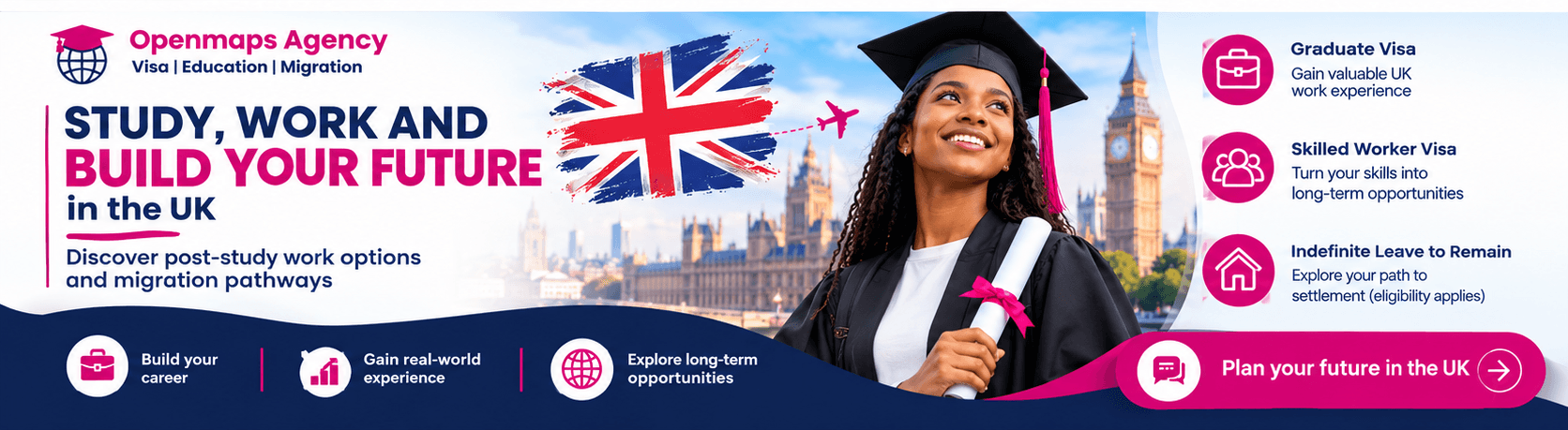
A UK qualification can be the beginning of more than an academic journey. It can help you develop professional skills, gain international exposure and explore opportunities to build your career after graduation.
For international students considering our UK partner institutions, understanding post-study work options and possible long-term immigration routes is an important part of planning.
1. Graduate Visa: An Opportunity to Gain UK Work Experience
Eligible international graduates may be able to apply for the UK Graduate visa after successfully completing an eligible degree or other qualifying course.
Under the rules currently published by the UK government:
- Apply by 31 December 2026: eligible graduates can receive a Graduate visa lasting two years.
- Apply on or after 1 January 2027: eligible graduates applying on the Graduate route will receive 18 months, unless they have a doctoral qualification.
- Doctoral graduates: eligible PhD and other doctoral graduates can receive three years.
The Graduate visa allows eligible holders to work in most jobs, look for employment and be self-employed. It is not a visa that can be extended, and it does not directly lead to permanent settlement. Applicants must apply from within the UK and meet the relevant eligibility requirements.
Important: The Graduate visa is not automatic. Students must complete an eligible course, and their education provider must notify the Home Office of their successful completion. Certain pathway or professional courses may not qualify, so check eligibility before enrolling.
2. Skilled Worker Visa: A Potential Route to Continue Working
For graduates who secure suitable employment, the Skilled Worker visa may provide an opportunity to remain in the UK for longer.
Generally, applicants need:
- A genuine job offer in an eligible occupation.
- An employer approved by the Home Office to sponsor workers.
- A Certificate of Sponsorship.
- A salary that meets the applicable immigration threshold and the occupation's going rate, subject to any relevant exceptions.
A UK degree does not guarantee a sponsored job or a Skilled Worker visa. Students should research their chosen industry's employment opportunities, professional requirements and sponsorship options early.
3. Long-Term Settlement: Plan Beyond Graduation
Some people who qualify for a Skilled Worker or other eligible immigration route may eventually be able to apply for Indefinite Leave to Remain (ILR), commonly known as settlement.
Under the current Skilled Worker settlement rules, qualifying applicants generally need five years of eligible residence, meet the applicable salary and employment conditions, and satisfy other requirements.
The key distinction: Time spent on a Graduate visa does not itself count towards the five-year Skilled Worker settlement period. Other immigration routes have their own eligibility and residence rules, and immigration policies can change.
4. Choose Your Course with Your Career Goals in Mind
When selecting a UK university or pathway programme, consider more than tuition fees and entry requirements. Think about the career you want to pursue, whether the profession is regulated, the qualifications employers expect and the visa routes that may be available.
Our team can help you explore courses offered by our partner institutions and understand the admission process, likely study costs and the questions to consider when planning your future.
Start Your UK Study Journey with a Plan
Your future starts with an informed decision. Speak to our team to explore suitable UK study options and prepare for your next intake.
Study with purpose. Graduate with ambition. Plan your next step with confidence.
Immigration outcomes are never guaranteed. Visa eligibility depends on individual circumstances and the rules in force at the time of application.